The Antique Hunter's Guide to Murder
The Antique Hunter’s Guide to Murder by C. L. Miller (2024)
★★★☆☆
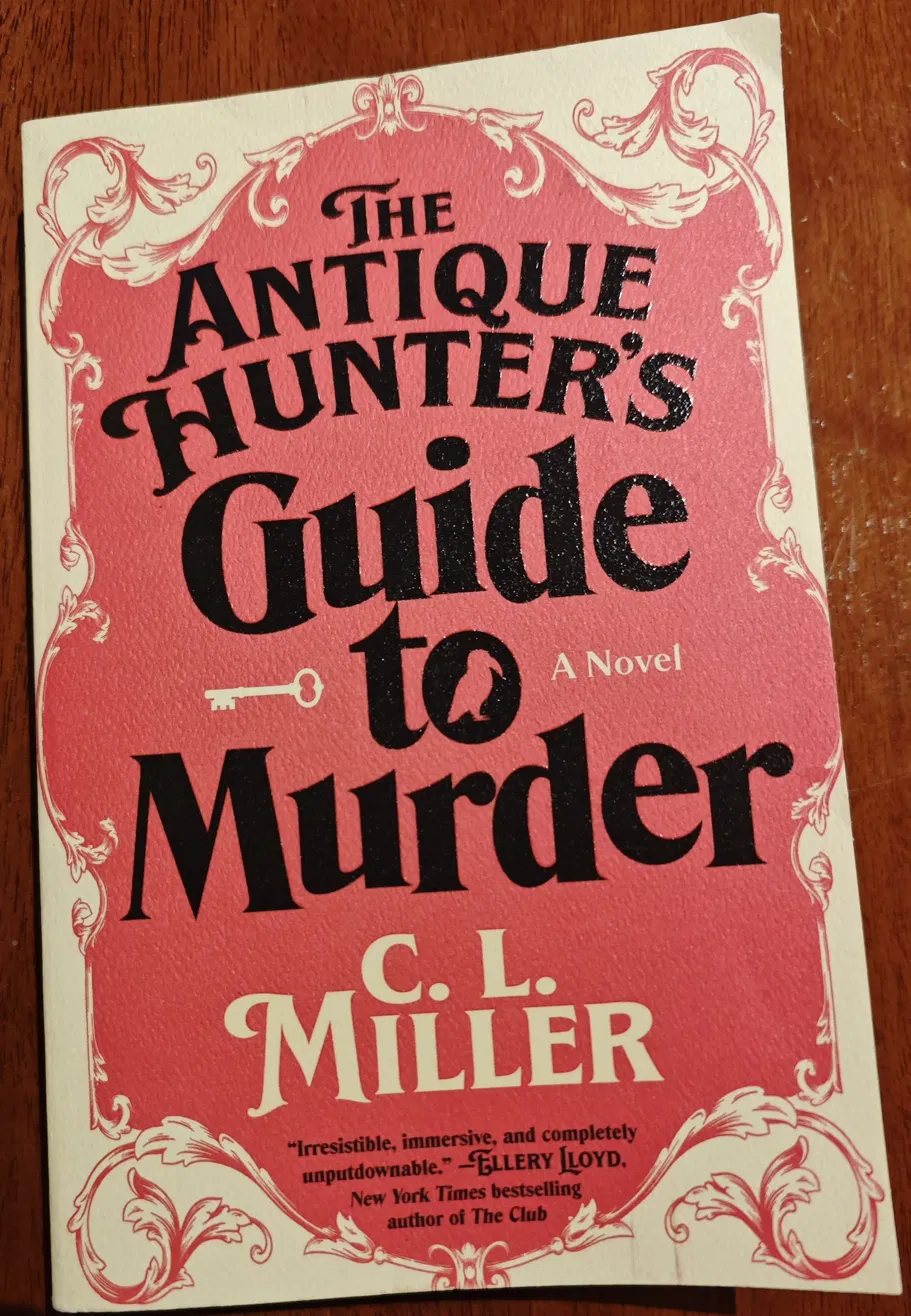
Note the bird silhouette in the O of “to”. Part of why I got the book!
Spoilers!
Another Winner’s clearance book. This one, though, only had two clearance stickers as opposed to four.
I read the Goodreads reviews after finishing the book, but before starting the review. They confirmed my view that it’s just… a meh book. More three star ratings than anything else.
I liked Freya as a diverse protagonist. By “diverse” I don’t mean a specific skin color or a never-before-seen superpower that sets her apart from all the other YA teens of Generic Fantasy World. Heck, I don’t even remember what she’s supposed to look like. But she’s divorced and in her forties. When’s the last time you’ve read a book starring a divorced woman in her forties?
She’s past her prime, in the sense that she used to be a super awesome antiques expert. A bad thing happened, so she quit. She’s had nothing to do with it in the two decades since.
She’s not a passive entity. Nobody forces her to attend a post-funeral event organized by ex-mentor. In fact, they’d all rather she not go. But she is strong, independent, and burdened by neither man nor child. In this sense she’s unique, and unique things are interesting.
Another interesting thing: this book felt very 2024 and female-gaze-oriented. Not a romance, but I’d be unsurprised if the reader demographic was similar. Freya’s ex-husband was The Worst. Our deuteragonist Carole says “white male privilege” at some point. This quote was on page 260:
Freya did need a bit of fun. Not a boyfriend or anything - no one needs one of those to hold them back. A… what was the modern term for these things? Oh yes, a friend with benefits. Carole had seen him topless, so she already knew that the goods were worth having.
Antiques Part
Antiques are a central theme of this book. I didn’t care about antiques before, and I don’t care about antiques now, but at least I have a better understanding of why people do. Yay empathy. They’re attached to stories, and stories are interesting. Also they’re rare and unique, and rich people like rare and unique things.
“Wally Birds” received a lot of page time, and I was pleased to discover they’re a real thing and probably the silhouette in the title.
I liked the nuance, but wish there was more. Freya believes antiques should be in museums, and that forgers are evil. Asim believed that forgers are great, because they sell the fakes to evil white people while the real copies stay in the nations they came from. Does it matter if they were stolen and trafficked, or sold at a fair price, or taken in war?
Why do we accept that China owns every giant panda, that every swan belongs to the King, that every Spix’s macaw belongs to the government of Brazil? Above my paygrade.
Right before the prologue, there’s this page:
This book was written in consultation with international antiques expert, Judith Miller (1951 - 2023)
I thought, neat!
The book is dedicated to her parents, and she thanks them again at the end. I somehow didn’t make the connection that Judith Miller is the mother of C. L. Miller.
Neither of them lived to see the book published. That made me sad.
GRIPES
P. 223
Asim would’ve also given us the photograph he had taken of the head of the forgery ring when that person had gone to Asim’s family home demanding the return of the Martin Brothers bird that his son had given them to copy.
Who. Gave the green light to that sentence.
Except for Bella; she seems to be here just because Giles is.
Is the reader supposed to agree with her here? Or are they supposed to see it as an obvious red herring placed by the author like “ah yes reader, you must suspect Bella now?”
They stepped into the shop and into the light.
My issue with this isn’t the they/them pronoun. Use they/them all you want, even if I do think ey/em is the superior option (courtesy of a foray into rationalism).
It’s that the POV character knows the identity of the they, but the author is choosing to hide it from us. Artificial suspense. Would it have felt less choppy as “The killer stepped into the shop and into the light”? I dunno, and besides, the killer hadn’t killed Arthur yet at that point.
I picked this book in part because I wanted to read more mystery. Get used to the genre conventions. See if I could predict the killer. I couldn’t! I thought it would be Meek Girlfriend Bella, or Evil Ex Husband, or Carole herself in a plot twist out of left field. But no, it was some guy that got barely any page time.
The fundamental issue was, it wasn’t that fun to read. I don’t think this book was trashy. It had soul, but it wasn’t particularly interesting. Why do I care who killed Arthur? He’s dead, and he lived a long exciting life. Was it because the writing wasn’t great? Was it because cozy books just aren’t for me? Why didn’t it pull me in? I’m not really sure.
Overall it was a lukewarm book, but I am one step closer to understanding the mystery genre.